Atmega 128 Uart

Sap netweaver 7.5 abap installation guide. End-to-End Implementation Roadmap for SAP BW ( PDF). Technical Operations for SAP NetWeaver. A comprehensive explanation of activities that system administrators perform regularly or on demand, such as monitoring, backing up and restoring, and data archiving. UI Technologies in SAP NetWeaver. Technology Consultants responsible for the implementation and operation of SAP systems; Prerequisites Essential. Data processing knowledge; Fundamental knowledge of operating systems and databases; Course based on software release. SAP NetWeaver AS 7.0; Content. Fundamentals of SAP Netweaver AS: Introduction to SAP NetWeaver; Architecture of.
Due to the preloaded Arduino Bootloader and the integrated USB UART converter with mini-USB connector, the module can directly be used with the Arduino IDE as an e.g. Arduino Mega 2560 board. Since the Arduino Software does not yet offer support for an ATmega128, we provide an extension to the Arduino Software. Unifying software for mac.
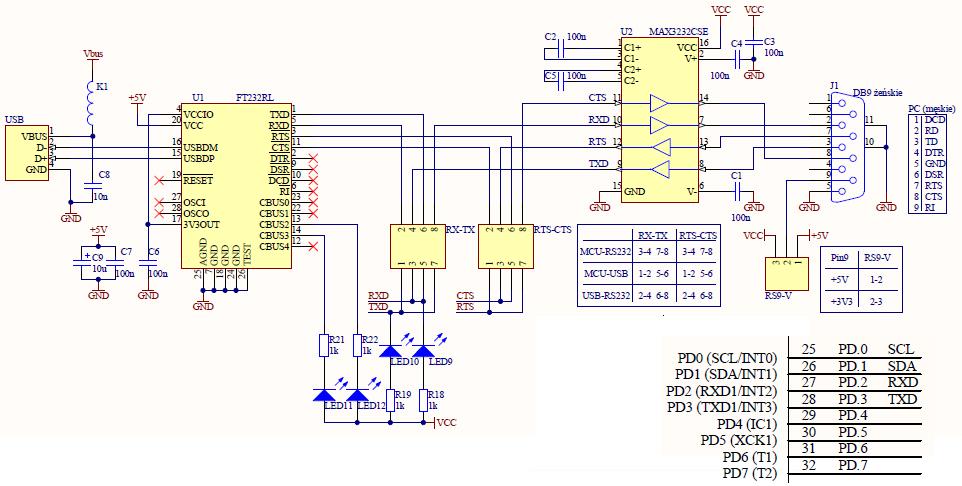
| /* |
| * uart.c |
| * |
| * Asynchronous UART example tested on ATMega328P (16 MHz) |
| * |
| * Toolchain: avr-gcc (4.3.3) |
| * Editor: Eclipse Kepler (4) |
| * Usage: |
| * Perform all settings in uart.h and enable by calling initUART(void) |
| * Compile: |
| * make all |
| * |
| * Functions: |
| * - First call initUART() to set up Baud rate and frame format |
| * - initUART() calls macros TX_START() and RX_START() automatically |
| * - To enable interrupts on reception, call RX_INTEN() macros |
| * - Call functions getByte() and putByte(char) for character I/O |
| * - Call functions writeString(char*) and readString() for string I/O |
| * |
| * Created on: 21-Jan-2014 |
| * Author: Shrikant Giridhar |
| */ |
| #include'uart.h' |
| // Debug Mode; comment out on Release |
| #define_DEBUG0 |
| /*! brief Configures baud rate (refer datasheet) */ |
| voidinitUART(void) |
| { |
| // Not necessary; initialize anyway |
| DDRD = _BV(PD1); |
| DDRD &= ~_BV(PD0); |
| // Set baud rate; lower byte and top nibble |
| UBRR0H = ((_UBRR) & 0xF00); |
| UBRR0L = (uint8_t) ((_UBRR) & 0xFF); |
| TX_START(); |
| RX_START(); |
| // Set frame format = 8-N-1 |
| UCSR0C = (_DATA << UCSZ00); |
| } |
| /*! brief Returns a byte from the serial buffer |
| * Use this function if the RX interrupt is not enabled. |
| * Returns 0 on empty buffer |
| */ |
| uint8_tgetByte(void) |
| { |
| // Check to see if something was received |
| while (!(UCSR0A & _BV(RXC0))); |
| return (uint8_t) UDR0; |
| } |
| /*! brief Transmits a byte |
| * Use this function if the TX interrupt is not enabled. |
| * Blocks the serial port while TX completes |
| */ |
| voidputByte(unsignedchar data) |
| { |
| // Stay here until data buffer is empty |
| while (!(UCSR0A & _BV(UDRE0))); |
| UDR0 = (unsignedchar) data; |
| } |
| /*! brief Writes an ASCII string to the TX buffer */ |
| voidwriteString(char *str) |
| { |
| while (*str != '0') |
| { |
| putByte(*str); |
| ++str; |
| } |
| } |
| constchar* readString(void) |
| { |
| char rxstr[RX_BUFF]; |
| char* temp; |
| temp = rxstr; |
| while((*temp = getByte()) != 'n') |
| { |
| ++temp; |
| } |
| return rxstr; |
| } |
| #if _DEBUG |
| intmain(void) |
| { |
| initUART(); |
| while(1) |
| { |
| writeString(readString()); |
| putByte('r'); |
| putByte('n'); |
| } |
| return0; |
| } |
| #endif |
| /* |
| * uart.h |
| * |
| * UART example for ATMega328P clocked at 16 MHz |
| * |
| * TODO :- |
| * - Implement string read function |
| * - Optimize for size |
| * - Add helper routines and compile to .a file |
| * |
| * Created on: 22-Jan-2014 |
| * Author: Shrikant Giridhar |
| */ |
| #ifndef UART_H_ |
| #defineUART_H_ |
| #include<avr/io.h> |
| #include<stdint.h> |
| /* Probably already defined somewhere else. Define here, if isn't. */ |
| #ifndef FOSC |
| #defineFOSC16000000UL |
| #endif |
| /* Settings */ |
| #define_BAUD9600// Baud rate (9600 is default) |
| #define_DATA0x03// Number of data bits in frame = byte tranmission |
| #define_UBRR (FOSC/16)/_BAUD - 1// Used for UBRRL and UBRRH |
| #defineRX_BUFF10 |
| /* Useful macros */ |
| #defineTX_START() UCSR0B = _BV(TXEN0) // Enable TX |
| #defineTX_STOP() UCSR0B &= ~_BV(TXEN0) // Disable TX |
| #defineRX_START() UCSR0B = _BV(RXEN0) // Enable RX |
| #defineRX_STOP() UCSR0B &= ~_BV(RXEN0) // Disable RX |
| #defineCOMM_START() TX_START(); RX_START() // Enable communications |
| /* Interrupt macros; Remember to set the GIE bit in SREG before using (see datasheet) */ |
| #defineRX_INTEN() UCSR0B = _BV(RXCIE0) // Enable interrupt on RX complete |
| #defineRX_INTDIS() UCSR0B &= ~_BV(RXCIE0) // Disable RX interrupt |
| #defineTX_INTEN() UCSR0B = _BV(TXCIE0) // Enable interrupt on TX complete |
| #defineTX_INTDIS() UCSR0B &= ~_BV(TXCIE0) // Disable TX interrupt |
| /* Prototypes */ |
| voidinitUART(void); |
| uint8_tgetByte(void); |
| voidputByte(unsignedchar data); |
| voidwriteString(char *str); |
| constchar* readString(void); |
| #endif/* UART_H_ */ |